Does Luck Really Exist in Online Casinos? Exploring the Truth Behind the Spin
Online casinos have exploded in popularity over the past decade, drawing millions of players worldwide with the promise of thrilling entertainment and the tantalizing hope of striking it rich. But as digital reels spin and virtual cards are dealt, one question lingers in the minds of many: does luck really exist in online casinos, or is it all just a cleverly coded illusion? This article dives deep into this fascinating topic, untangling the complex web of chance, statistical realities, technological safeguards, and the psychological factors that shape our perception of “luck” in the digital gambling world.
The Foundations of Online Casino Games: Randomness and Algorithms
At the heart of every online casino game is a single, powerful concept: randomness. Unlike traditional brick-and-mortar casinos, where physical dice and shuffling cards create unpredictability, online platforms rely on advanced technology to simulate genuine chance.
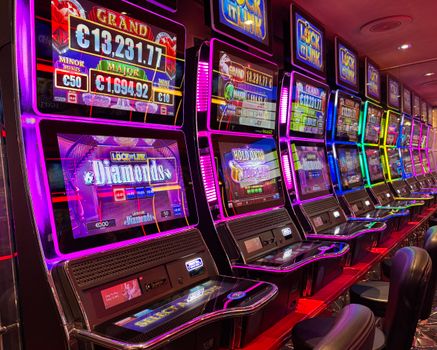
Modern online casinos use Random Number Generators (RNGs) to ensure every outcome is unpredictable. RNGs are sophisticated algorithms that produce sequences of numbers with no discernible pattern. For example, every time you spin a slot or play a hand of blackjack online, an RNG has already determined the result in a fraction of a second.
.png)
To maintain fairness, reputable online casinos have their RNGs tested and certified by independent organizations like eCOGRA and iTech Labs. According to a 2023 report by eCOGRA, over 90% of leading online casinos undergo annual external audits to confirm their RNGs’ randomness and fairness.
But does randomness equal “luck”? Or is it simply the cold, impartial hand of mathematics at work? Understanding this distinction is crucial to answering whether luck truly plays a role in online casinos.
Probability, House Edge, and the Illusion of Luck
Every online casino game is governed by mathematical probabilities. These probabilities dictate the long-term outcomes, ensuring the house always maintains an edge. The “house edge” is a percentage that represents the average profit a casino expects to make from each game over time.
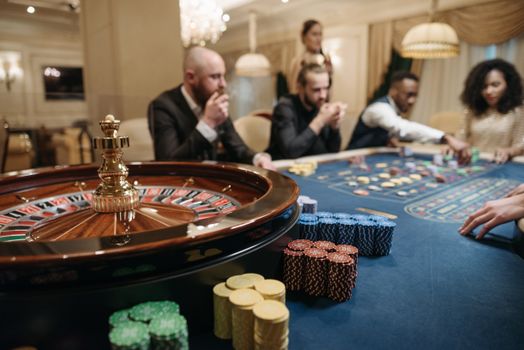
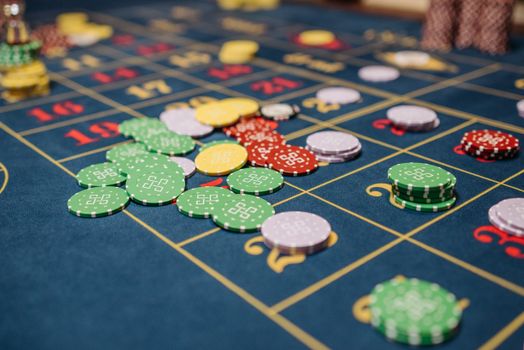
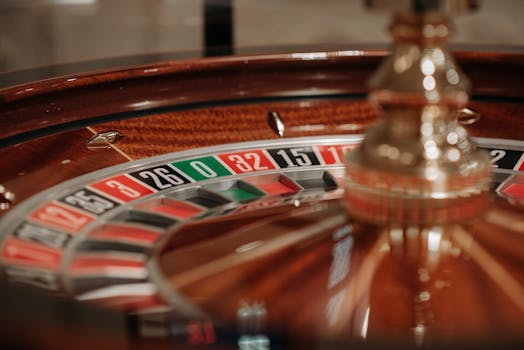
For example, European Roulette has a house edge of 2.70%, meaning that for every $100 wagered, the casino expects to keep $2.70 in the long run. Slot machines can have house edges ranging from 2% to over 10%, depending on the game’s design and payout structure.
Here’s a comparison of typical house edges in popular online casino games:
| Game | Typical House Edge (%) | RNG Used? |
|---|---|---|
| European Roulette | 2.70 | Yes |
| American Roulette | 5.26 | Yes |
| Blackjack (optimal strategy) | 0.5 - 1.0 | Yes |
| Online Slots | 2.0 - 10.0 | Yes |
| Baccarat | 1.06 - 1.24 | Yes |
These numbers reveal that while short-term outcomes can swing wildly—sometimes resulting in large wins—the long-term results always favor the house. This is not a matter of luck, but of statistical certainty. What players often perceive as being “lucky” or “unlucky” is, in fact, the natural variance built into the games.
The Role of Streaks, Outliers, and Big Wins
Despite the mathematical rigor behind online casino games, every player has heard stories—if not experienced themselves—of astonishing winning streaks or crushing losing runs. These streaks fuel the belief in luck, but are they truly evidence of some mystical force?
The answer lies in the concept of variance. Variance measures how much the results of a game can differ over short periods. High-variance games, like many online slots, produce more dramatic swings, including both massive wins and long dry spells. Low-variance games, like baccarat, offer more stable, predictable results.
Statistically, rare events do occur. In 2022, a player reportedly won over $20 million on a single spin of the Mega Moolah online slot—a life-changing outcome that’s incredibly unlikely, but not impossible. Such outliers tend to be highly publicized, reinforcing the idea that some people are simply luckier than others.
However, for every big winner, thousands of players experience average or below-average results, rarely making headlines. Over millions of spins or hands, the distribution of results always aligns with the game’s underlying probabilities—even if individual sessions feel “lucky” or “unlucky.”
Psychology of Luck: Why We Believe in Being Lucky (or Unlucky)
The human mind is wired to find patterns, even where none exist. This tendency, known as apophenia, leads many gamblers to see winning or losing streaks as evidence of being lucky or cursed. In online casinos, this is amplified by rapid gameplay and flashy visuals.
Research from the University of Nevada found that over 60% of online gamblers believe luck plays a significant role in their outcomes, despite understanding the games are determined by random algorithms. This belief is reinforced by cognitive biases:
- $1 Remembering wins more vividly than losses, reinforcing the belief in personal luck. - $1 Believing that after a series of losses, a win is “due,” despite each game being independent. - $1 Thinking that choosing certain games, strategies, or even times to play can influence outcomes.Online casinos sometimes fuel these beliefs by highlighting recent big winners, offering “hot” or “cold” game labels, and sending congratulatory messages after wins. These features, while entertaining, have no bearing on the actual odds or randomness of future outcomes.
Technology, Fairness, and the Limits of Luck
One of the biggest misconceptions about online casinos is that they may be “rigged” or that luck can be manipulated. In reality, strict regulatory frameworks are in place to protect players and ensure fairness.
As of 2024, over 85 countries have enacted online gambling regulations, requiring operators to use certified RNGs and disclose Return to Player (RTP) percentages for each game. The RTP is the theoretical percentage of wagered money a game will return to players over millions of plays. For example, a slot with a 96% RTP will, over the very long term, pay out $96 for every $100 wagered.
Independent testing agencies audit these systems regularly. According to a 2023 audit by GLI (Gaming Laboratories International), 98% of tested online slot games met or exceeded declared RTP values. This means that, while luck dictates the outcome of individual spins, the games themselves cannot be manipulated in favor of or against individual players.
Still, it’s important to play only at licensed, reputable online casinos. Unlicensed or rogue operators may not adhere to these standards, potentially compromising fairness and player security.
Skill vs. Luck: Are There Any Games Where Skill Matters?
While most online casino games are governed almost entirely by chance, a few offer opportunities for skillful play. Poker is the most prominent example, where player decisions and strategies can significantly influence outcomes over the long run. However, even in games like blackjack, skill can only minimize the house edge—it cannot eliminate the element of luck altogether.
For example, using basic strategy in online blackjack can reduce the house edge to as low as 0.5%. However, the outcome of each hand is still subject to the shuffle of the (virtual) deck. In contrast, slots and roulette offer no scope for strategic advantage; outcomes are purely random.
This distinction highlights that while luck is always present, its influence can vary depending on the game. In most online casino games, however, luck—defined as the random, unpredictable outcome of each play—is the dominant force.
Final Answer: Does Luck Really Exist in Online Casinos?
So, does luck really exist in online casinos? The answer depends on how we define “luck.” If we see luck as a supernatural force favoring some and not others, the answer is no: online casinos are governed by mathematics, probability, and rigorously tested algorithms.
However, if we define luck as the random distribution of outcomes, then yes—luck is an inherent part of every online casino game. Every spin, deal, or roll is unpredictable, meaning anyone can win or lose at any time. But over the long term, the laws of probability and the house edge ensure that the casino always comes out on top.
The next time you play at an online casino, remember: your experience of “luck” is simply the natural ebb and flow of randomness, not a sign of cosmic favor or disfavor. Enjoy the excitement, but always play responsibly, knowing that in the world of online casinos, chance—and not fate—truly rules the game.