
Casino gaming has always been wrapped in a fascinating debate: is it probability or luck that truly determines who walks away a winner? While casual players often attribute their fortunes to that elusive “lucky streak,” professionals and mathematicians look at the cold, hard numbers. Understanding the interplay between probability and luck is essential—not only for players curious about their odds but also for anyone intrigued by the mechanics behind the glittering world of casinos. In this article, we’ll strip back the myths, explore the science and psychology, and reveal which force—probability or luck—holds more sway over casino outcomes.
Defining Probability and Luck in the Casino Context
To compare probability and luck fairly, it’s crucial to define both concepts clearly within the realm of gambling.
Probability is a mathematical measure of how likely an event is to occur. In casinos, probability governs the foundational rules of every game. For instance, the chance of landing a single number in roulette is 1 in 37 (European wheel) or 1 in 38 (American wheel), since there are those many possible outcomes.
.png)
Luck, on the other hand, is the occurrence of events in a way that seems random and unpredictable, often perceived as good or bad fortune. In gambling, luck is experienced as that rare jackpot hit or a string of wins—or losses—that defy the odds.
The distinction is sharp: probability is calculable and predictable over the long run, while luck feels spontaneous, personal, and impossible to systematize.
How Probability Shapes Casino Games
Every casino game is meticulously designed around probability. The “house edge”—the mathematical advantage that ensures the casino profits in the long term—is built on probability calculations. Here are some concrete examples:
- In European roulette, the house edge is 2.7%. That means for every $100 wagered, the casino expects to keep $2.70 over thousands of spins. - Blackjack, when played with optimal strategy, gives the house an edge as low as 0.5%. - Slot machines have a programmed "return to player" (RTP) percentage, typically ranging from 85% to 98%, which dictates the average payout over many spins.Let’s compare some common casino games by their probabilities and house edges:
| Game | House Edge (%) | Chance of Winning (Typical Bet) |
|---|---|---|
| Roulette (European) | 2.7 | 48.6% (Red/Black bet) |
| Blackjack | 0.5-2 | 42-49% (Depends on skill & rules) |
| Slot Machines | 2-15 | Varies (Typically
More from the archiveView full article archive →
luckylounge.casino
Master Blackjack: Strategies, Tools, and Tips for Long-Term Success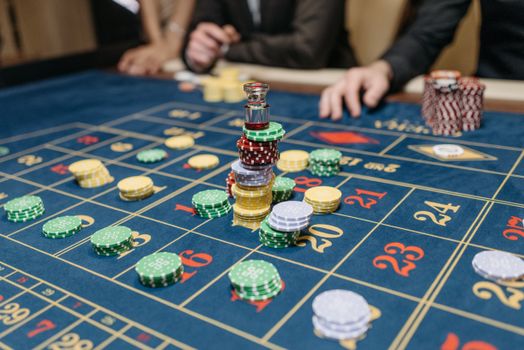
luckylounge.casino
Preventing Gambling Addiction: Strategies, Tools, and Support
luckylounge.casino
How Casino Bonuses Shape Online Gambling Behaviors and Loyalty
luckylounge.casino
Unlock Slot Success: Mastering Pay Tables to Win Big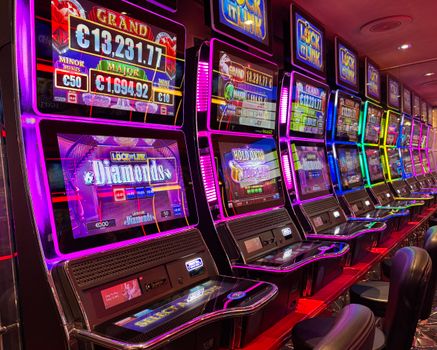
luckylounge.casino
Win Big with Progressive Jackpot Slots: A Player's Ultimate Guide
luckylounge.casino
Unlock Elite Rewards: How to Maximize Online Casino VIP Programs
luckylounge.casino
Winning by Losing: Mastering the 'Accept Defeat' Strategy in Gambling
luckylounge.casino
How Mobile Apps Are Revolutionizing the Online Gambling Industry |