Roulette, with its spinning wheel and iconic green felt, has long captivated casino-goers worldwide. But behind the glitz and glamour lies a game that fascinates with its blend of chance, superstition, and strategic dreaming. With so many myths and supposed “winning systems” swirling around roulette, how can players separate fact from fiction? In this in-depth look at the best strategies for playing roulette, we explore what really works, what doesn’t, and how to approach the game with realistic expectations.
The Basics of Roulette: Understanding the Odds
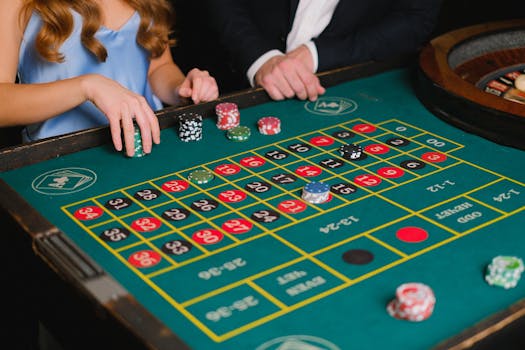
Before diving into strategies, it’s essential to understand how roulette works. Roulette features a wheel with either 37 (European) or 38 (American) numbered pockets, including one (or two) green zeroes. When the ball drops, players win or lose based on their bets—ranging from single numbers, colors (red/black), to dozens or columns.
The house edge is the cornerstone of roulette. In European roulette, the house edge is 2.70% due to a single zero, while American roulette’s extra double zero increases the house edge to 5.26%. This means the casino, on average, expects to collect $2.70 for every $100 wagered on European wheels, and $5.26 for every $100 on American wheels.
.png)
These subtle differences drastically impact long-term outcomes for players, making game selection a crucial (and often overlooked) strategy.
Popular Roulette Strategies: Myths Versus Mathematical Reality
Roulette has inspired countless betting systems, many promising to beat the house. But how do these stack up against mathematical reality?
Let’s examine a few well-known approaches:
- $1: Players double their bet after every loss, aiming to recover losses with a single win. While it can work for short streaks, it quickly becomes risky—table limits and bankroll constraints make it unsustainable in the long run. - $1: Bets follow the famous number sequence (1, 1, 2, 3, 5, 8, etc.), increasing after losses. This system grows more slowly than Martingale, but the same principle (chasing losses) applies, and it doesn’t alter the house edge. - $1: This approach increases bets by one unit after a loss and decreases by one after a win. It’s less aggressive, but still doesn’t overcome the game’s inherent odds. - $1: Players use a pre-set sequence of numbers to determine bet size, crossing off numbers after wins and adding after losses. While it can be engaging, it’s complex and, again, doesn’t change the underlying probabilities.Mathematicians and casino experts agree: no betting system can overcome the built-in house advantage. Over time, all systems are subject to the same odds.
Psychological Myths: Hot Numbers, Lucky Charms, and Other Fallacies
Roulette’s enduring appeal is partly due to superstition and psychology. Many players chase “hot numbers” (numbers that have hit frequently), avoid “cold numbers,” or carry lucky tokens to the table. The truth? Each spin of the wheel is independent—a concept known as statistical independence.
The “Gambler’s Fallacy”—believing that past events influence future outcomes—often lures players into unwise bets. For example, if black has come up five times in a row, some believe red is “due.” In reality, the odds remain the same: in European roulette, there’s a 48.65% chance of landing on red with every spin.
A 2022 survey by the UK Gambling Commission found that 38% of players believed in “lucky streaks” or that certain numbers were luckier—a testament to how powerful these myths remain. However, casino data and the laws of probability confirm that luck is random and every number is equally likely to hit.
Smart Strategies: Maximizing Fun and Minimizing Losses
If beating the house is impossible in the long run, what can a savvy roulette player do? The answer lies in maximizing enjoyment and managing risk. Here are some practical approaches:
- $1: The single zero reduces the house edge by nearly half. If you have a choice, always opt for European wheels. - $1: Bets like red/black, odd/even, or high/low offer nearly 50/50 odds and lower volatility. While payouts are smaller (1:1), your risk of losing your bankroll quickly is reduced. - $1: Decide in advance how much you are willing to lose. Stick to your budget, and never chase losses. - $1: Online casinos often offer bonuses for roulette, but check the terms. Some bonuses exclude table games or have high wagering requirements. - $1: Remember, roulette is a game of chance. Approach it as a form of entertainment, not a way to make money. - $1: Casinos are designed to keep you playing. Regular breaks and self-awareness help maintain control.Comparing Roulette Bets: House Edge and Payouts
Not all roulette bets are created equal. Some offer much better odds than others, even if the payouts differ. Here’s a handy table comparing common bets, their payouts, and the house edge for European roulette:
| Bet Type | Payout | Odds of Winning | House Edge |
|---|---|---|---|
| Single Number (Straight Up) | 35:1 | 2.70% | 2.70% |
| Red or Black | 1:1 | 48.65% | 2.70% |
| Odd or Even | 1:1 | 48.65% | 2.70% |
| High (19-36) or Low (1-18) | 1:1 | 48.65% | 2.70% |
| Dozens (1-12, 13-24, 25-36) | 2:1 | 32.43% | 2.70% |
| Column | 2:1 | 32.43% | 2.70% |
While the house edge remains constant across most bets, the probability of winning changes. Outside bets (red/black, odd/even) are less volatile, giving players more frequent wins but lower payouts.
Online Versus Land-Based Roulette: Which Is Better?
Since the rise of online casinos, players have more options than ever. But does playing online change your odds, or offer strategic advantages?
- $1: Online casinos often feature European, French, and American roulette. French roulette, with the “La Partage” rule, cuts the house edge to just 1.35% on even-money bets—a significant advantage. - $1: Online roulette tends to be faster, meaning you may place more bets per hour and potentially lose money more quickly if not careful. - $1: Online platforms offer welcome bonuses, cashback, and loyalty programs, which can provide extra value if used wisely. - $1: Land-based casinos offer atmosphere, social interaction, and the tactile feel of chips and wheels—elements many players cherish. - $1: Reputable online casinos use certified random number generators (RNGs) to ensure fairness. Always check for licensing and regulation.Ultimately, your choice depends on personal preference. If you want a lower house edge and more options, online may be better. If you play for the thrill and social aspect, a physical casino can’t be beat.
Final Thoughts: Playing Roulette Wisely
The world of roulette is rich with legends, systems, and stories of dramatic wins and losses. But the reality is clear: while clever betting systems and superstitions can make the game more engaging, they can’t overcome the house edge embedded in every spin. The best strategy is to play smart, manage your bankroll, understand the odds, and—most importantly—enjoy the experience for what it is.
Knowledge is your best ally at the roulette table. By separating myth from reality, you’ll be better equipped to make informed choices, resist the lure of risky systems, and savor the excitement of the game—win or lose.