The idea of luck—an invisible force that seemingly governs our fortunes—has fascinated humanity for centuries. Nowhere is this more evident than in the world of gambling, where the line between skill and chance is often blurred. This brings us to a provocative question: Can luck be learned? Is it possible to cultivate certain habits, mindsets, or behaviors that make us "luckier," or is luck an immutable force, forever out of our control? In this deep dive into the gambler's conundrum, we unravel psychological research, real-world examples, and statistical evidence to explore whether luck is simply a roll of the dice—or something we can nurture.
The Psychology of Luck: Is It All in Your Head?
The notion that luck can be learned might sound fantastical, but psychologists have long studied how beliefs and attitudes influence outcomes that seem random. Dr. Richard Wiseman, a leading authority on the science of luck, conducted a ten-year study involving over 1,000 participants. He found that people who considered themselves lucky were not simply beneficiaries of random good fortune. Instead, they exhibited certain patterns:
- They were more open to new experiences. - They maintained positive expectations about the future. - They were more resilient in the face of setbacks. - They noticed and acted upon chance opportunities.Wiseman summarized that "lucky" people create, notice, and act upon opportunities more than "unlucky" people do. This suggests that luck is, at least partially, a mindset that can be cultivated.
.png)
Moreover, the "self-fulfilling prophecy" effect comes into play. If you believe you are lucky, you are more likely to take chances, thus increasing the likelihood of a positive outcome. In gambling, this doesn't alter the odds, but it does change your behavior at the tables or slots.
Skill vs. Chance: How Much Control Do Gamblers Really Have?
To understand if luck can be learned, we must differentiate between games of skill and games of chance. In casino gaming, most games fall somewhere on the spectrum:
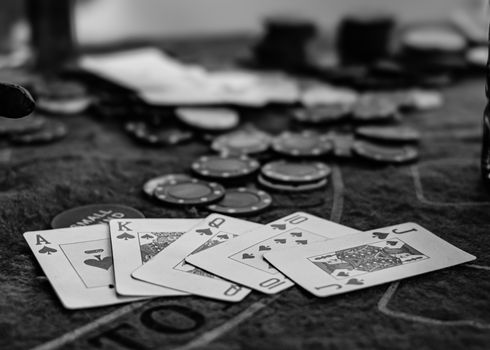
- Pure chance: Slot machines, roulette, lotteries - Mix of skill and chance: Poker, blackjack, sports bettingLet’s look at a comparison:
| Game | Luck (%) | Skill (%) | Typical House Edge |
|---|---|---|---|
| Roulette | 100 | 0 | 2.7% (European) |
| Slot Machines | 100 | 0 | 4-10% |
| Poker | 60 | 40 | Player vs player (rake: 2-5%) |
| Blackjack | 80 | 20 | 0.5-2% |
In games of pure chance, no amount of learned behavior can change the statistical probabilities. However, in games involving skill, players can "create their own luck" by making optimal choices. This is where the line blurs: Is it luck, or is it preparation meeting opportunity?
Behavioral Patterns of “Lucky” Gamblers
Are some gamblers truly luckier than others, or do they simply behave differently? A 2018 study published in the Journal of Gambling Studies analyzed over 1,200 casino players and found certain behavioral patterns among self-described "lucky" gamblers:
- They set strict limits on losses and wins. - They avoided chasing losses, reducing risk-taking under stress. - They employed strategies to maximize their chances in skill-based games.For example, in blackjack, basic strategy can reduce the house edge to just 0.5%, but only 16% of regular players consistently use optimal strategies. Those who do often report "luckier" outcomes, but in reality, they are simply making better decisions.
Moreover, lucky gamblers are more likely to network, share tips, and learn from others, increasing their exposure to information that could benefit them in the long run.
The Role of Serendipity: Can You Engineer Good Fortune?
Serendipity—the occurrence of beneficial events by chance—plays a significant role in perceptions of luck. But can serendipity be fostered? Research suggests yes.
A 2010 study by the University of Hertfordshire found that people who practiced mindfulness and stayed present in the moment were more likely to notice unexpected opportunities. For gamblers, this could mean spotting a rare promotion, a favorable table, or simply being alert enough to avoid costly mistakes.
Additionally, "lucky" people tend to have wider social networks. Statistically, the more people you know, the more likely you are to receive useful information or invitations to lucrative opportunities—both inside and outside the casino.
Consider the story of Archie Karas, who turned $50 into $40 million through an extraordinary winning streak in Las Vegas during the 1990s. While luck played a part, Karas also possessed acute observational skills, discipline, and an uncanny ability to read opponents—key ingredients in engineering serendipitous outcomes.
Cognitive Biases: Why We See Patterns in Randomness
A major factor in the gambler’s conundrum is the human tendency to see patterns where none exist—a psychological quirk known as apophenia. This leads to the "hot hand" fallacy (believing a winning streak will continue) and the "gambler's fallacy" (believing a loss increases the chance of a win).
A notable example: In a 2009 experiment, researchers gave participants sequences of random coin tosses. Participants consistently overestimated the likelihood of "tails" after a string of "heads"—even though the chance remained 50%.
Understanding these biases is essential. While they don’t make us luckier, being aware of them can prevent costly errors. This is one way in which learning about luck—through education and self-reflection—can improve outcomes, even if it doesn't change the fundamental odds.
Can Luck Be Learned? The Science and Skepticism
So, can luck be learned? The answer is nuanced.
On the one hand, statistical probability in games of pure chance is fixed. No amount of positive thinking or ritual can alter the odds of a roulette wheel or slot machine.
On the other hand, scientific research shows that people can position themselves to experience more "lucky" outcomes by:
- Being open and observant - Networking and sharing information - Practicing skills in games where strategy matters - Avoiding cognitive traps and emotional biasesIn essence, while you cannot control randomness, you can control your approach, choices, and mindset. This can lead to better outcomes that feel like luck—but are often the result of preparation, awareness, and action.
Final Thoughts on Cultivating Luck in Gambling and Life
The gambler's conundrum—whether luck can be learned—reveals that fortune favors the prepared, the observant, and the resilient. While the random nature of most gambling games means true luck cannot be engineered, the strategies and mindsets associated with "lucky" individuals can lead to better results over time.
In life, as at the gaming table, those who keep their eyes open for opportunity, learn from their experiences, and remain psychologically resilient may find themselves "luckier" than those who do not. While you can’t change the roll of the dice, you can change how you play the game.