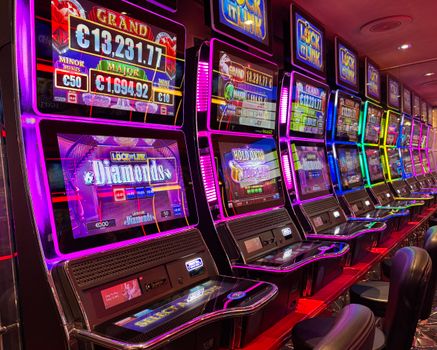
Slot machines are a staple of both online and land-based casinos, famous for their flashing lights, exciting sounds, and dreams of life-changing jackpots. Yet behind the glitz and glamour, one question continues to intrigue both seasoned gamblers and newcomers: just how much of slot machine play is truly down to luck? By breaking down the mechanics, probabilities, and psychology of slot machines, we can gain a clearer understanding of the powerful—and sometimes misunderstood—role that luck plays in every spin.
The Mechanics Behind Slot Machines: More Than Just Pulling a Lever
Modern slot machines have come a long way since their invention in the late 19th century. Today’s slots, whether physical or digital, operate using sophisticated random number generators (RNGs) that determine the outcome of each spin. RNGs are algorithms that produce thousands of numbers per second, ensuring every spin is independent and unpredictable.
For example, if a slot machine has 5 reels and 20 symbols per reel, there are 3,200,000 possible combinations (20 x 20 x 20 x 20 x 20). The RNG assigns a random number to each symbol position, so when you press the “spin” button, the current RNG output dictates the result. The moment you activate the spin, the outcome is instantly determined—regardless of how long the reels spin on the screen.
.png)
This technological underpinning is crucial: it means there is no way to influence the outcome of a spin. There are no “hot” or “cold” machines, and no timing or strategy can sway the result. In other words, luck—manifested as pure randomness—rules every outcome.
Payout Percentages and the House Edge: How Luck Is Statistically Framed
Every slot machine is programmed with a specific payout percentage, often referred to as Return to Player (RTP). RTP is the theoretical percentage of wagered money that a slot machine will pay back to players over time. For instance, if a slot has an RTP of 96%, it’s designed to return $96 for every $100 wagered in the long run.
However, this figure is averaged over millions of spins. In practice, individual results vary wildly—some players may hit a big jackpot, while most will see smaller or negative returns. The house edge is the flip side of RTP; it’s the percentage the casino expects to keep. If a slot’s RTP is 96%, the house edge is 4%.
Here’s a comparison of typical slot RTPs versus other casino games:
| Game | Typical RTP | House Edge |
|---|---|---|
| Classic Slots | 85-95% | 5-15% |
| Modern Video Slots | 92-98% | 2-8% |
| Blackjack | 99.5% | 0.5% |
| Roulette (European) | 97.3% | 2.7% |
| Baccarat | 98.94% | 1.06% |
What does this data tell us? Slot machines generally have a higher house edge than most table games, meaning they rely more heavily on luck for players to win, especially in the short term.
Volatility and Variance: How Luck Feels Different on Every Slot
Not all slot machines are created equal, even if they appear similar on the surface. One of the biggest variables affecting how luck is experienced is a slot’s volatility (or variance).
- Low volatility slots pay out small wins frequently, with fewer large jackpots. - High volatility slots pay out less often, but the wins can be much larger.For example, a low volatility slot might pay out $5-10 every few spins, but rarely offers a big jackpot. Conversely, a high volatility slot could go for 50 spins without a win, then suddenly pay out $1,000 or more. This difference creates a unique emotional experience for players:
- Low volatility slots appeal to those seeking steady entertainment and longer play. - High volatility slots attract risk-takers hoping for a big, lucky break.Neither type is “luckier” in the long run, as both are governed by their programmed RTP and RNG. However, the perception of luck is amplified in high volatility slots, where rare wins can feel miraculous.
Progressive Jackpots: When Luck Transforms Lives
Progressive slot machines take the role of luck to another level. These games pool a small percentage of every wager into a central jackpot, which can reach astronomical sums. For instance, the Mega Moolah progressive slot paid out a world-record €19.4 million ($21.7 million) in 2021.
Winning a progressive jackpot is entirely a matter of luck. The odds can be astronomical—often as low as 1 in 50 million or more. No skill, system, or timing can improve your chances. The only way to win is to be in the right place at the right time, spinning the reels when the RNG lands on the jackpot combination.
Despite these odds, progressive jackpots remain hugely popular, precisely because they offer the tantalizing possibility of an overnight transformation. The role of luck is never more apparent than when an ordinary player walks away with a multi-million dollar prize.
The Gambler’s Fallacy and Slot Machine Myths
Even with all the technology and statistics, many myths persist about how luck works in slot machines. One of the most common is the “gambler’s fallacy”—the belief that a machine is “due” for a win after a long losing streak, or that previous outcomes influence future ones.
In reality, because of the RNG, every spin is independent. A slot machine that hasn’t paid out in hours is no more likely to pay out on the next spin than one that just hit a jackpot. This misconception leads many players to chase losses or switch machines in the hope of improving their luck, when in fact, chance reigns supreme.
Other common slot machine myths include:
- Believing that playing at certain times of day increases your odds - Thinking that stopping the reels at the right moment changes the outcome - Assuming that higher denomination slots are “luckier” than penny slotsAll of these are illusions. The only factor at play is the RNG, which operates independently of time, bet size, or player intervention.
Skill vs. Luck: Can Player Decisions Influence Slot Outcomes?
Unlike table games such as poker or blackjack, where strategy can shift the odds, slot machines offer virtually no room for skill. The only decisions a player makes are:
1. Which machine to play 2. How much to bet 3. When to start and stopThese choices do not affect the outcome of any single spin, only the player’s budget and playing time. A 2019 study by the University of Nevada, Las Vegas, found that “player choices in slot machine play have no impact on outcomes,” reaffirming that luck is the sole determinant.
There are a few rare exceptions: some “skill-based” slots incorporate bonus rounds where reaction speed or accuracy can affect the size of a win. However, these are the exception, not the rule, and even then, the base game remains governed by the RNG.
Final Thoughts: Embracing the Randomness of Slot Machines
Understanding the role of luck in slot machines is essential for any player hoping to enjoy the experience responsibly. While the possibility of a big win is always present, it’s important to recognize that every spin is dictated by algorithms designed to ensure randomness and maintain the house edge. No amount of strategy, superstition, or timing will change your odds.
Statistics demonstrate that slots are among the most luck-driven games in any casino, with higher house edges and payouts determined entirely by chance. Whether you’re playing for fun or chasing a jackpot, approaching slots as a game of pure luck can help you play within your means and keep the experience enjoyable.