Understanding the Balance Between Luck and Strategy in Blackjack
Blackjack, also known as 21, stands out as a staple in the casino world, attracting millions with its seamless blend of chance and tactful play. This article aims to dissect the dualistic nature of blackjack, assessing the roles both luck and strategy play in the game's dynamics.
The Basics of Blackjack
.png)
The primary goal in blackjack is to beat the dealer's hand without busting over 21. Players start with two cards and can choose to 'hit' for more cards, 'stand' to halt, 'double' to increase the bet size for one more card, 'split' identical cards into two separate hands, or 'surrender' to forfeit half the bet and end the round. The dealer, meanwhile, plays according to fixed rules, commonly standing on 17 and above and hitting on 16 and below.
The Role of Luck
Luck in blackjack emerges from the randomness of the deck. Each draw is an independent event, with no control over the cards that come your way. This inherent unpredictability adds a thrilling element to the game, as the turn of a card can dramatically alter the state of play.
The Power of Strategy
What sets blackjack apart from pure games of chance like slots or roulette is the potential for strategic play. Blackjack strategy involves making calculated decisions that enhance your chances of winning. The most foundational of these is the 'basic strategy'—a statistically optimized method advising players on when to hit, stand, double, split, or surrender based on one's hand and the dealer’s visible card.
For example, under basic strategy, a player should typically hit on a 16 if the dealer shows a 7. This move statistically offers the best chance of improving the hand without busting. By adhering to these strategies, players can significantly lower the house edge.
Advanced Techniques: Card Counting
For the more adept players, card counting offers a way to shift the odds in their favor by tracking high and low-value cards seen during play. This technique helps predict the likelihood of the next cards being beneficial and adjust bets accordingly. However, card counting demands considerable skill and concentration, and it's largely ineffective in online blackjack where decks are reshuffled automatically after each hand.
Effective bankroll management is crucial in blackjack. Setting a loss limit and a strategic betting pattern based on the flow of wins and losses can help maintain your finances and potentially increase your winnings.
The Social Element
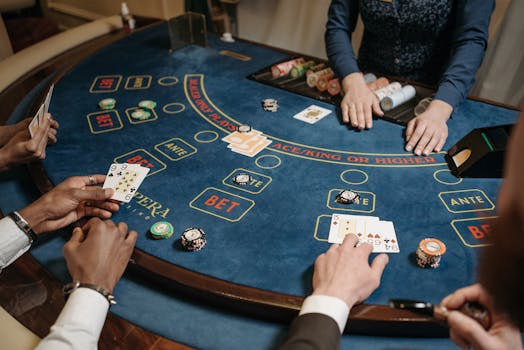
Blackjack is often played at a shared table, where interactions with other players and the dealer can enrich the experience. The social component can provide not just camaraderie but also additional layers of strategy, as observing others' choices can inform your own game decisions.
Conclusion: A Symbiotic Relationship
In blackjack, luck sets the stage, but strategy directs the play. While the cards dealt are governed by chance, a player's active decisions sculpt the game's outcome. Both beginners and seasoned gamblers can benefit from understanding and leveraging the intricate balance of luck and strategy in blackjack. Whether you're engaging in a casual game or aiming for high stakes, remember that every hand presents a fresh opportunity to apply your skills and perhaps tip the scales in your favor.