Gambling: The Intersection of Luck and Mathematics
Gambling has fascinated societies for thousands of years, from ancient dice games to the glitzy casinos of Las Vegas and the digital realms of online betting. At its core, gambling is a unique blend of luck and mathematics, where unpredictable outcomes meet the rigid rules of probability. For every roll of the dice, spin of the wheel, or flip of a card, chance plays its role—yet behind the scenes, mathematics quietly governs the odds and long-term results. Understanding this intersection is crucial not just for gamblers, but also for anyone interested in decision-making, risk, and the psychology of chance.
This article takes you beyond the usual discussions of superstition or “hot streaks.” Instead, we’ll explore how mathematical concepts like probability, expected value, and house edge shape every gambling experience. Along the way, you’ll see how luck and math interact—sometimes in surprising ways—and why knowing the numbers can both empower and caution those drawn to games of chance.
The Role of Probability in Gambling: More Than Just Luck
Every gambling game, whether in a casino or online, is built on probability—the branch of mathematics that measures the likelihood of different outcomes. While luck might determine who wins a particular hand or round, it’s probability that defines what’s possible over the long run.
.png)
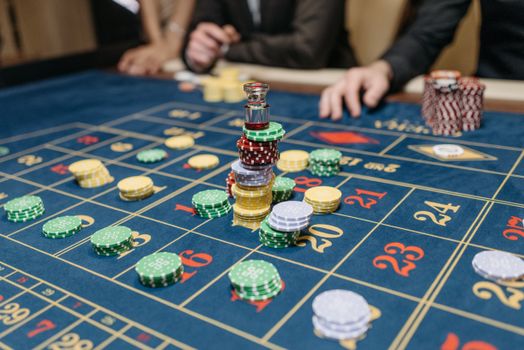
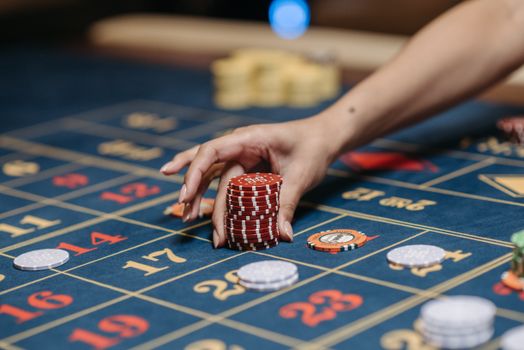
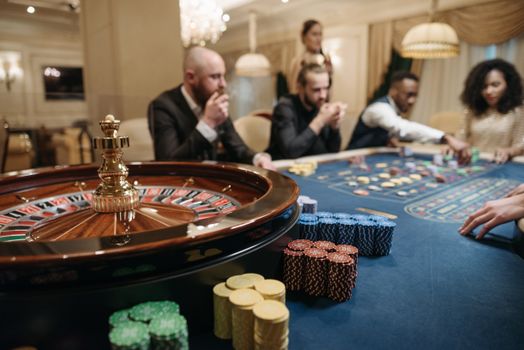
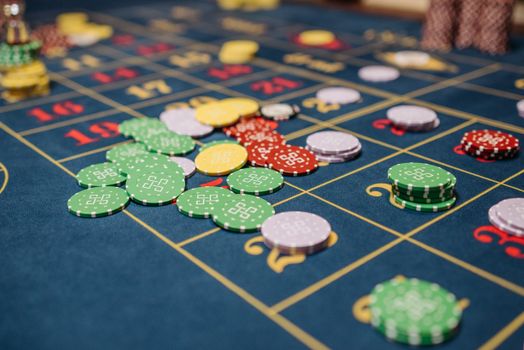
For example, consider a standard European roulette wheel, which has 37 slots (numbers 0 to 36). If you bet on a single number, your chance of winning is 1 in 37, or about 2.7%. The payout for a correct bet is 35 to 1, which seems generous, but the odds still favor the house. This mathematical imbalance is what keeps casinos profitable in the long run.
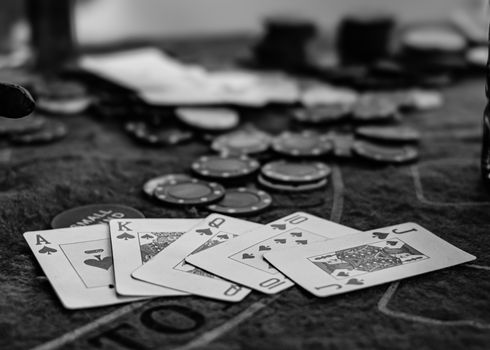
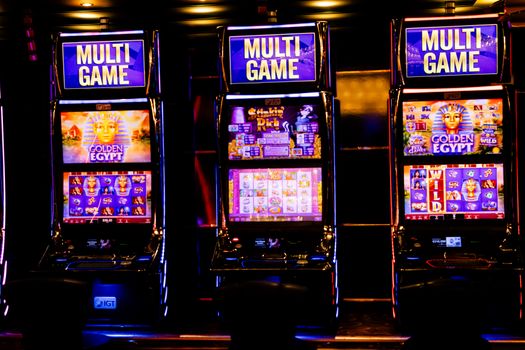
Key facts: - The probability of drawing a winning hand in five-card poker is about 0.025% for a royal flush. - Slot machines are programmed with a “return to player” (RTP) percentage, often between 85% and 98%, meaning for every $100 wagered, the machine pays back $85 to $98 on average. - The odds of winning a lottery jackpot, such as Powerball, are 1 in 292 million.These examples show that while luck determines short-term outcomes, probability—rooted in mathematics—shapes the long-term expectations.
House Edge: How Casinos Use Mathematics to Ensure Profits
Casinos are not in the business of leaving their profits to pure chance. Every game is carefully designed with a mathematical advantage for the house, known as the “house edge.” This percentage represents the average profit the casino expects to make from each game over time.
Let’s look at some examples:
| Game | House Edge (%) | Typical Player Odds |
|---|---|---|
| Blackjack | 0.5–2.0 | Better with strategy |
| European Roulette | 2.7 | Single zero wheel |
| American Roulette | 5.26 | Double zero wheel |
| Slot Machines | 2–15 | Varies by machine |
| Baccarat | 1.06 (banker bet) | One of the lowest edges |
The house edge ensures that, while individual players may win or lose in the short term, the casino profits consistently over thousands of bets. Players who understand the house edge can make more informed decisions about which games to play and what bets to place.
Expected Value: The Mathematical Average of Every Bet
A cornerstone of gambling mathematics is the concept of expected value (EV). Expected value represents the average outcome if you were to repeat a particular bet many times. It takes into account all possible outcomes, their probabilities, and their payouts.
For example, imagine a simple coin toss game where you bet $1 on heads. If you win, you get $2 (your dollar back, plus $1 profit). If you lose, you get nothing. The expected value calculation would look like this:
- Probability of heads (win): 0.5 × $1 = $0.50 - Probability of tails (lose): 0.5 × -$1 = -$0.50Total EV = $0.50 + (-$0.50) = $0
This is a “fair” game with no advantage to either side. But in most casino games, the EV is negative for the player due to the house edge. For instance, betting on a single number in European roulette:
- Probability of winning: 1/37 ≈ 0.027 - Payout: 35 to 1 ($35 profit for $1 bet) - Probability of losing: 36/37 ≈ 0.973EV = (0.027 × $35) + (0.973 × -$1) = $0.945 - $0.973 = -$0.028
This means, on average, you lose 2.8 cents per $1 bet in the long run. Understanding expected value helps players see past the thrill of individual wins or losses and appreciate the true cost of gambling over time.
Variance and Volatility: Why Results Feel So Random
If math determines the long-term outcomes, why do gambling results feel so unpredictable in the short term? The answer lies in variance and volatility—two mathematical concepts that describe how much results can swing above or below the average.
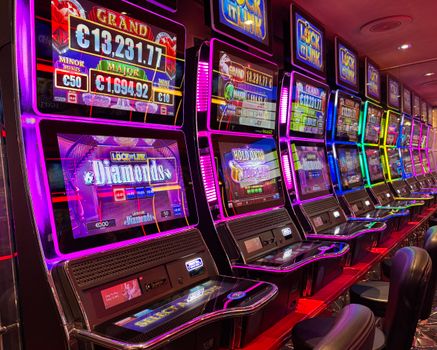
Variance measures how far outcomes deviate from the mathematical expectation. High-variance games, such as slot machines or lottery draws, can produce massive wins or losses in quick succession, even though the overall expected value remains negative. Low-variance games, like baccarat or blackjack (when played with optimal strategy), offer more steady, predictable results.
For example: - Slot machines can have variances so high that a player might hit a $10,000 jackpot after hundreds of losing spins, giving the illusion of a “lucky streak.” - In a game like blackjack, using basic strategy reduces both the house edge and the variance, resulting in smaller, more frequent wins and losses.Volatility is what creates memorable moments—both good and bad—in gambling. It’s also what makes games exciting, drawing players back for the chance at a big win, even when the mathematics suggest otherwise.
Skill Versus Chance: When Mathematics Can Beat Luck
Not all gambling games are created equal. Some are pure games of chance, where mathematics only describes the odds and outcomes (such as roulette or lotteries). Others, like poker or sports betting, combine chance with skill and strategy, allowing players to use mathematics to gain an edge.
In poker, for example, players can use probability, game theory, and psychological insight to make better decisions than their opponents. A famous case is the 2003 World Series of Poker, where amateur Chris Moneymaker used mathematical thinking to outplay professionals and win $2.5 million.
Sports betting is another area where skill can make a difference. Savvy bettors use statistics, historical data, and probability models to identify undervalued bets. While chance still plays a role (no one can predict every outcome), a mathematically sound approach can tilt the odds in a player’s favor over time.
Key statistics: - Professional poker players can expect long-term returns of 10% or more on their investment, compared to the negative expected value of most casino games. - In 2023, the global sports betting market was valued at $83.65 billion, with many bettors using advanced analytics to inform their decisions.The Psychological Allure of Luck Versus Mathematical Reality
Despite the math, many gamblers are drawn to the idea of luck—a force that can turn the tables in their favor. This psychological allure is powerful, driving everything from lucky charms to elaborate betting rituals. Yet, time and again, research shows that mathematical reality prevails in the long run.
Casinos and game designers use this tension to their advantage. Random rewards, intermittent wins, and near misses all exploit the brain’s tendency to overestimate the role of luck and underestimate the power of mathematics. Gamblers often remember big wins and forget long strings of losses, a phenomenon known as “recency bias.”
A 2022 study by the National Council on Problem Gambling found that 48% of regular casino visitors believed they could “get lucky” and beat the odds, even though house edge and probability ensure that the majority will lose money over time.
Understanding the interplay between luck and mathematics can help players enjoy gambling responsibly, appreciating the excitement of chance while respecting the underlying math.
Final Reflections: Navigating the World of Gambling with Insight
Gambling sits at a fascinating crossroads of luck and mathematics. Every spin, shuffle, or draw is governed by probability, expected value, and variance, even as chance determines the immediate outcome. While luck might explain short-term results, mathematics rules the long-term, guiding both casinos and skillful players.
Recognizing this intersection empowers gamblers to make smarter choices, appreciate the true nature of games, and avoid costly misconceptions. Whether you play for fun, profit, or curiosity, understanding the mathematics behind gambling is the surest way to keep the odds—and your expectations—in perspective.