The Mathematics of Gambling: Understanding Odds and Probability
Gambling has fascinated humankind for centuries, blending the allure of chance with the logic of numbers. Whether it’s the spinning wheel of roulette, the shuffle of cards in blackjack, or the roll of dice in craps, every wager made in a casino or online is governed by the universal language of mathematics. At the heart of this language are two crucial concepts: odds and probability. Understanding how these concepts work is not just the domain of professional gamblers or statisticians—anyone who places a bet can benefit from a clearer grasp of the math that shapes every outcome. In this article, we’ll unravel the mathematics of gambling, using real-world examples, key statistics, and easy-to-follow explanations that reveal the true nature of luck, risk, and reward.
What Are Probability and Odds? The Building Blocks of Gambling
Probability and odds are often used interchangeably in everyday conversation, but in mathematics, they have distinct and precise meanings. Probability is a measure of how likely an event is to occur, usually expressed as a number between 0 (impossible) and 1 (certain). It can also be shown as a percentage or a fraction. For example, the probability of flipping a fair coin and getting heads is 0.5 or 50%.
Odds, on the other hand, compare the likelihood that an event will happen to the likelihood that it will not happen. Odds can be stated as “X to Y” (e.g., 1 to 1 for a fair coin toss), as fractions, or as decimals. In gambling, odds determine the payouts: the higher the odds against an event, the bigger the payout if it occurs.
.png)
Let’s see how probability and odds are calculated in a simple scenario:
- Probability of rolling a 6 on a standard die: 1/6 ≈ 0.1667 or 16.67% - Odds of rolling a 6: 1 (success) to 5 (failure), or 1:5Understanding these concepts is the first step toward decoding any gambling game, from slot machines to sports betting.
How Probability Shapes Casino Games: Examples and Insights
Every casino game is built on the foundation of probability. The rules, payouts, and even the design of the games are all carefully calibrated to ensure predictable long-term outcomes for both player and house. Let’s look at a few well-known examples:
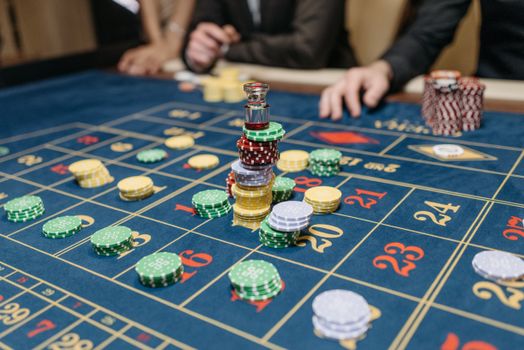
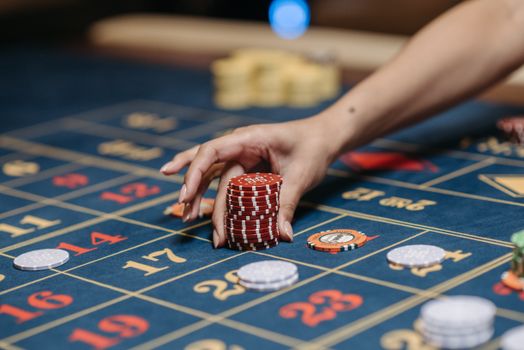
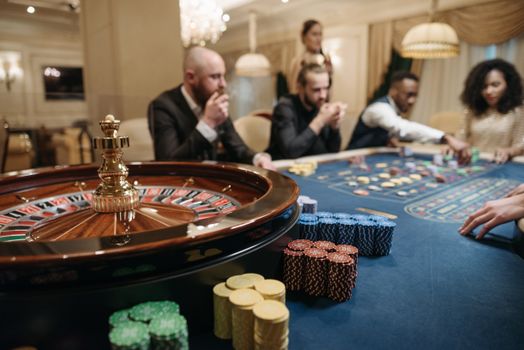
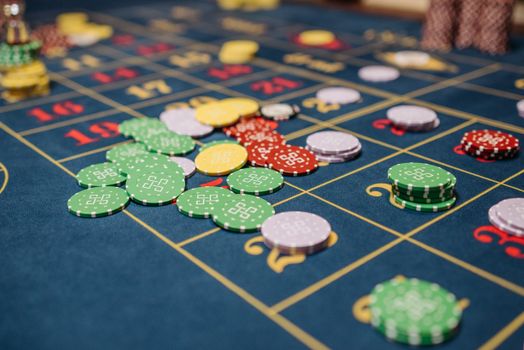
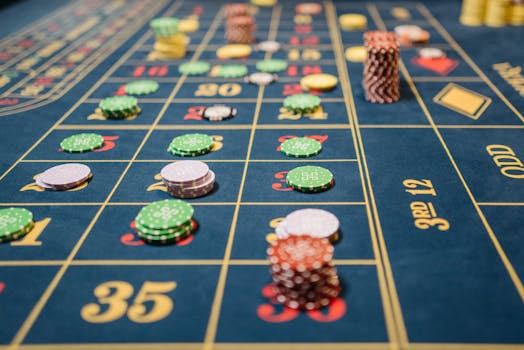
Roulette: In American roulette, the wheel has 38 slots (numbers 1-36, plus 0 and 00). The probability of the ball landing on any single number is 1/38, or about 2.63%. However, a winning straight-up bet pays 35 to 1. The expected value of this bet is negative, illustrating the house edge.
Blackjack: In blackjack, the probability of being dealt a natural blackjack (an ace and a ten-value card) in your first two cards is about 4.8%. But the payouts, rules, and strategy options (such as splitting or doubling down) create a complex web of probabilities that skilled players can use to reduce the house edge to below 1%—if they play perfectly.
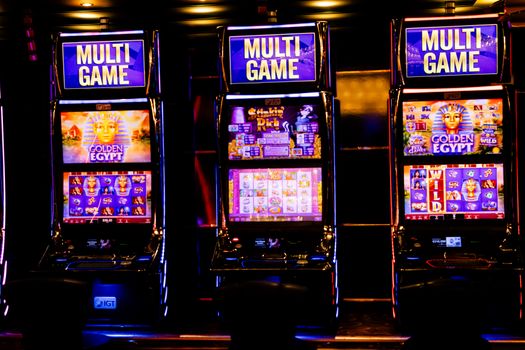
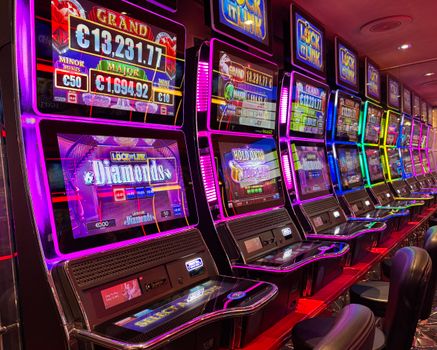
Slot Machines: Modern slot machines use random number generators (RNGs) to determine outcomes. The probability of hitting a jackpot on a three-reel slot with 20 symbols per reel is (1/20) x (1/20) x (1/20) = 1 in 8,000, or 0.0125%. Yet, the flashing lights and near-misses can make the odds feel very different.
Understanding these probabilities helps players make informed decisions and appreciate the true nature of risk in each game.
House Edge and Expected Value: The Casino’s Mathematical Advantage
Casinos are not in business to lose money. The “house edge” is the built-in advantage that ensures the casino makes a profit over time. It’s calculated as the average percentage of each bet that the casino expects to keep in the long run.
For example: - American roulette: House edge is 5.26% - European roulette: House edge is 2.70% - Baccarat (banker bet): House edge is 1.06% - Blackjack (with perfect basic strategy): House edge can be as low as 0.5%Another key concept is expected value (EV)—the average amount a player can expect to win or lose per bet if the same bet is made repeatedly. If the EV is negative, the game is unfavorable to the player.
Let’s calculate the expected value for a $1 straight-up bet on American roulette: - Probability of winning: 1/38 - Payout if you win: $35 (plus your $1 bet back, total $36) - Probability of losing: 37/38 - Loss if you lose: $1Expected value = (1/38 x $36) + (37/38 x -$1) ≈ $0.947 - $0.974 ≈ -$0.027 per $1 bet
This means that, on average, you lose about 2.7 cents for every dollar wagered.
The Mathematics of Sports Betting: Odds Formats and Implied Probability
Sports betting introduces additional layers of mathematical complexity, including different ways of expressing odds and the concept of “implied probability”—the chance of an outcome as implied by the bookmaker’s odds.
Three common odds formats are: - Fractional (UK): e.g., 5/1 means you win $5 for every $1 wagered - Decimal (Europe): e.g., 6.0 means your total return is $6 for every $1 wagered - Moneyline (US): e.g., +500 means you win $500 for every $100 wagered To convert odds to implied probability: - Fractional: Probability = denominator / (numerator + denominator) - Decimal: Probability = 1 / decimal odds - Moneyline: For positive odds: Probability = 100 / (odds + 100); for negative odds: Probability = odds / (odds + 100)Let’s compare three bets with equivalent odds shown in different formats:
| Odds Format | Odds | Implied Probability | Potential Payout (on $10 bet) |
|---|---|---|---|
| Fractional | 5/1 | 16.7% | $50 |
| Decimal | 6.0 | 16.7% | $50 |
| Moneyline | +500 | 16.7% | $50 |
This table shows that while the odds may appear different, the underlying probabilities and payouts are the same. Bookmakers adjust odds to ensure their own margin, known as the “overround,” which results in a negative expected value for most bettors.
Variance, Streaks, and the Law of Large Numbers in Gambling
Gambling outcomes are not just about averages—they’re also about variability. “Variance” measures how much actual results can differ from expected results in the short run. High-variance games, such as slot machines or lottery tickets, can produce big wins or losses quickly, while low-variance games like baccarat offer steadier, smaller swings.
The “law of large numbers” is a fundamental statistical principle: over many repetitions, the average outcome will converge to the expected value. This is why casinos can rely on their mathematical edge over thousands or millions of bets, even though individual players may have winning or losing streaks in the short term.
For example, the probability of flipping ten heads in a row with a fair coin is (0.5)^10 = 0.0009765625, or about 0.098%. While rare, such streaks are inevitable over many trials. Understanding this helps explain both the excitement and the risk of gambling, and why “luck” tends to even out over time.
Real-World Impact: How Probability Shapes Gambling Behavior
The mathematics of gambling goes beyond casinos and betting shops—it influences player decisions, responsible gambling policies, and even national economies. According to the American Gaming Association, the U.S. commercial gaming industry generated a record $60.4 billion in revenue in 2022, highlighting just how much is at stake.
Understanding odds and probability can help individuals: - Make more informed decisions about which games to play - Recognize the limits of “systems” and “strategies” that promise guaranteed wins - Set realistic expectations for losses and wins - Avoid common cognitive traps, such as the gambler’s fallacy or belief in “hot streaks”For governments and regulators, knowledge of probability is essential for setting fair game rules, ensuring transparency, and protecting vulnerable players from the risks of problem gambling.
Final Thoughts: The Power of Knowing the Odds
Gambling may be a game of chance, but the mathematics behind it follows exact rules. Whether you’re a casual player or a serious bettor, understanding probability and odds can transform your experience. It empowers you to see through the illusions of luck, recognize the true cost of each bet, and enjoy gambling for what it is: entertainment, not a path to guaranteed riches. The next time you place a wager, remember that every spin, roll, or hand deals not just cards or numbers, but the invisible hand of mathematics guiding every outcome.