Luck is the invisible hand that gamblers chase, curse, and celebrate—but what if luck could be measured, analyzed, or even quantified? For centuries, mathematicians, psychologists, and casual players have tried to pin down the elusive nature of luck in gambling, seeking the ever-alluring “winning formula.” Is luck just a random force, or can patterns, probabilities, and statistical analysis reveal its secrets? This article dives deep into the science and statistics behind luck, explores attempts to quantify it, and investigates whether a real “winning formula” exists in the unpredictable world of gambling.
The Science of Luck: Can It Be Measured?
At its core, luck is about randomness and probability. In gambling, “luck” typically refers to the outcomes that are favorable but statistically unlikely. These outcomes are governed by mathematical principles, not magic. For instance, the odds of winning a standard 6/49 lottery are about 1 in 13,983,816—demonstrably rare, but not impossible.
Researchers have attempted to quantify luck by measuring deviation from expected probabilities. For example, in a fair coin toss, the probability of heads is 50%. If you flip a coin 100 times and get 70 heads, you’ve experienced a statistical anomaly—what most people would call “good luck.” Statisticians refer to this as “variance.” Over time and many trials, these deviations tend to even out, illustrating the famous Law of Large Numbers.
.png)
Interestingly, a 2018 study in the Journal of Risk and Uncertainty found that most gamblers overestimate the influence of short-term luck, underestimating the long-term dominance of mathematics. In other words, while you might have a lucky streak, the odds always win in the long run.
House Edge and Expected Value: The Mathematical Limits of Luck
Every gambling game is built with a mathematical advantage for the house, known as the “house edge.” This is the percentage of each bet that the casino expects to retain over time. For example:
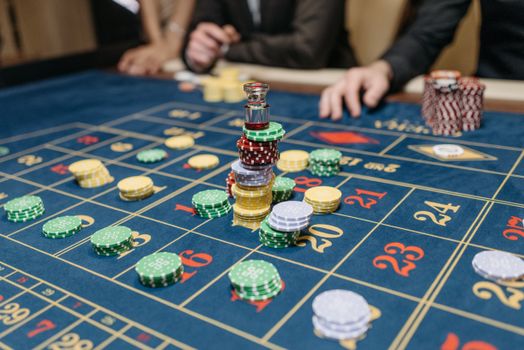
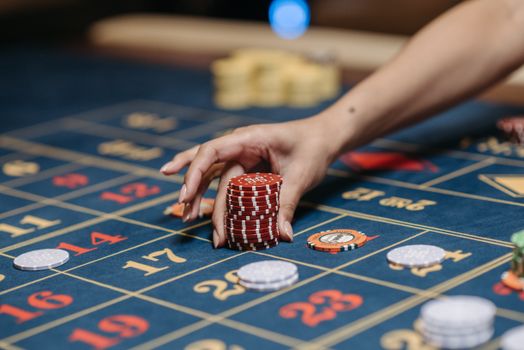
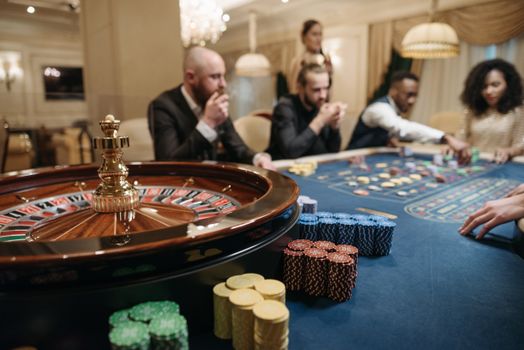
- American Roulette: House edge is 5.26% - European Roulette: House edge is 2.7% - Blackjack (with optimal play): House edge can be as low as 0.5%This means that for every $100 wagered in American Roulette, the casino expects to keep $5.26 in the long run. These numbers aren’t just theory—they’re embedded in the rules of the games themselves.
The concept of “expected value” (EV) is another tool for quantifying luck. EV is the average amount you can expect to win or lose per bet if you played an infinite number of times. For example, in a fair coin toss betting $1, the EV is $0 (you break even). In most casino games, EV is negative for the player, reflecting the house edge.
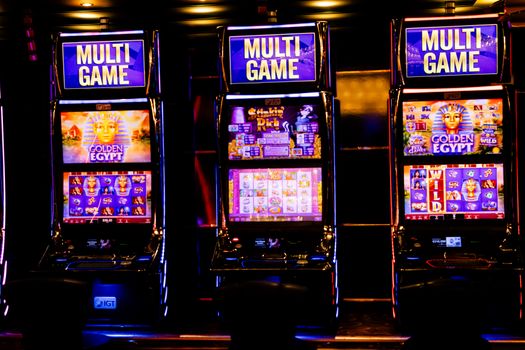
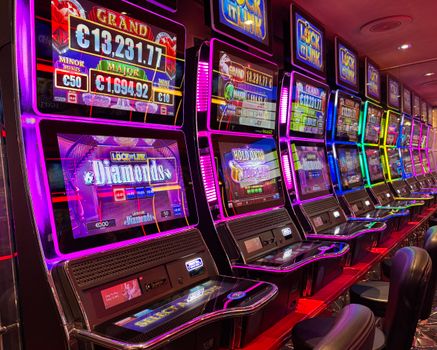
Even games that feel “lucky,” like slot machines, are governed by programmed “return to player” (RTP) percentages. A typical slot might have an RTP of 96%, meaning that, over time, it pays out $96 for every $100 wagered. The remaining $4 is the casino’s gain—a subtle but relentless edge.
Streaks, Patterns, and the Illusion of Control
Gamblers often see patterns in random outcomes—a phenomenon known as “apophenia.” Hot and cold streaks, “lucky numbers,” and rituals are psychological attempts to control or predict outcomes that are, by design, random. In reality, each spin of the roulette wheel or deal of the cards is independent of previous events.
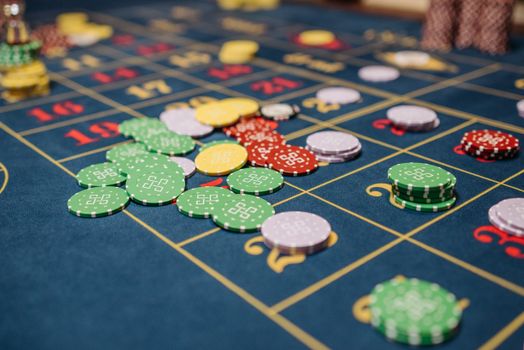
A famous example is the Monte Carlo fallacy, where players believe that a string of reds means black is “due” to appear next in roulette. Statistically, the chance remains exactly the same for each spin—past events do not influence future outcomes.
Despite this, streaks do occur, simply because of probability. In a 2022 analysis of over 10,000 blackjack hands, researchers found that streaks of 5 wins or 5 losses in a row occurred about 3% of the time—less often than gamblers perceive, but not impossible. The key is understanding that these streaks are not evidence of a change in luck, but natural fluctuations in random sequences.
Data-Driven Gambling: Can Analytics Beat Luck?
With the rise of big data and computer modeling, some gamblers and mathematicians have tried to use advanced analytics to “quantify” luck and improve their chances. Card counting in blackjack is one notable example where skill and memory can tilt the odds slightly in the player’s favor, reducing or even overcoming the house edge when perfectly executed.
In sports betting and poker, professional gamblers use complex statistical models, tracking thousands of variables to identify favorable bets. For instance, the MIT Blackjack Team famously used card counting to win millions in Las Vegas during the 1980s and 1990s. In poker, players track “expected value” across hands, using software to analyze play and find profitable situations.
However, these methods require skill, discipline, and mathematical precision. Most games of chance, like slot machines and lotteries, remain immune to analytics because their outcomes are truly random and independent.
Below is a comparison table showing which gambling games allow skill to influence outcomes versus those that are purely luck-driven:
| Game | Skill Influence | Randomness | Typical House Edge |
|---|---|---|---|
| Blackjack (with card counting) | High | Medium | 0% to 1.5% |
| Poker (tournament) | High | Medium | 0% (player vs. player) |
| Sports Betting | Medium | Medium | Varies (typically 4.5% vigorish) |
| Roulette | None | High | 2.7% - 5.26% |
| Slot Machines | None | High | 4% - 15% |
| Lottery | None | Very High | 50%+ |
As the table shows, games like blackjack and poker offer opportunities to apply skill and analytics, while lotteries and slots are almost entirely dictated by luck and randomness.
The Human Element: Perception of Luck and Risk
No discussion of luck in gambling is complete without acknowledging the role of human psychology. Studies show that people’s perception of their own luck can influence how much they gamble, how much risk they take, and how they interpret outcomes.
A 2021 survey by the UK Gambling Commission found that 48% of regular gamblers believe in “lucky streaks,” and 29% reported using rituals or charms in hopes of influencing outcomes. This psychological dimension means that people may continue playing—even when the math is against them—because they feel “due” for a win or believe their luck will change.
Researchers at Stanford University have found that people who consider themselves “lucky” are more likely to take risks, bet larger amounts, and chase losses, which increases the volatility of their gambling experience. This can lead to both higher wins and more severe losses, reinforcing the emotional rollercoaster at the heart of gambling.
Are There Any Real Winning Formulas?
Despite centuries of searching, there is no foolproof “winning formula” that can guarantee consistent profits in games of pure chance. Mathematical models, such as the Kelly criterion, can help bettors optimize wager sizes, but they do not change the underlying probabilities.
Professional advantage players—like card counters or skilled poker players—can gain a temporary edge in certain games, but these methods are not applicable to most casino games, and casinos take steps to limit or ban such strategies.
Lottery syndicates, where groups pool tickets to increase their chances, can slightly improve odds but do not change the fundamental math—someone in the group may win, but the expected value remains negative.
Ultimately, the only formula that consistently wins in gambling is the one used by the house: set the odds so that, across millions of bets, the casino comes out on top.
Final Thoughts on Quantifying Luck in Gambling
The dream of quantifying luck and finding a winning formula in gambling has fueled both serious scientific inquiry and age-old superstition. While mathematics can explain the odds, probabilities, and even occasional “hot streaks,” it also demonstrates the inescapable truth: over time, the house always wins.
For the casual gambler, understanding the limits of luck can foster healthier, more enjoyable play. For professionals, discipline and skill can tip the scales—sometimes, and only in specific games. But for most, luck remains what it always has been: unpredictable, tantalizing, and ultimately, out of our control.